«My name is Hubert. I completed the intensive, bespoke practical training course at EIG Monaco, which allowed me to quickly gain theoretical knowledge of gemmology. This was with the aim of getting out into the field as quickly as possible. Working with my brother, who also completed part of his training at EIG Monaco, we now run a family business specialising in India and Sri Lanka.»
Professional Stages
GEMMOLOGY TRAINING COURSES
INTENSIVE GEMMOLOGY COURSES
WITH EIG MONACO
Whether you're taking your first steps as an amateur and want to discover the beauty of precious stones, or you're eager to deepen your knowledge of gemmology, improve your analysis methods, or retrain, our à la carte courses can be tailored to your goals, constraints, and availability.
Duration
Intensive: two weeks per degree
Evening course: Twenty Tuesdays per term from 5:15 PM to 8:15 PM
In the afternoon: Twenty Tuesdays from 2 p.m. to 5 p.m.
Once a month: every first Monday of the month from 9:15 am to 5:15 pm from October to July
Private tutoring: personalised quote according to the level of support required
Objectives
Two Professional Certificates
– Professional Gemmology Certificate validating degrees 1-2-3
– Professional Gemstone Expertise Certificate validating degrees 4-5-6
From amateur discovery to professionalisation, you validate each of the 6 degrees at your own pace.
Localisation
Monaco
The gemology programme is divided into 6 progressive levels, which each person can follow at their own pace.
Also offered as private lessons, each of the six levels is suitable for anyone requiring flexibility and modularity in their schedule.
You can undertake professional internships for blocked weeks or opt for courses in the afternoon, evening, once a week or once a month.
The International School of Gemmology of Monaco is at your service to help you build your personal project.
OPEN STAGES FOR EVERYONE
FROM GRADE 1 TO GRADE 6
Intensive two-week courses or one evening per week, one afternoon per week, or one day per month.
Evening Classes: Tuesdays from 5:15 PM to 8:15 PM (20 sessions September/December and February/June)
DEGREE 1
- Prerequisites: None, general public
- Average duration: 70
- Programme
Discover the main gemstone families and their varieties.
Learn to use the basic tools of gemmology that will enable you to identify and analyse each type of stone/gem.
Understanding how stones are affected by light.
- Certificate Issued: Gemmology first-degree certificate
- SI Tariff: €2,200 – duration two weeks
- From Monday 15 June to Friday 26 June 2026
- From Monday 13 July to Friday 24 July 2026
- From Monday 14 September to Friday 25 September 2026
- From Monday 1 February 2027 to Friday 12 February 2027
LEVEL 2
- Prerequisites: Gemmology Degree 1
- Average duration: 70
- Programme
Understanding the geological and crystallographic formation of gemstones.
Discover natural inclusions and learn to identify them.
Focus on the four great so-called precious stones: diamond, emerald, sapphire, and ruby.
- Certificate issued : Level 2 Certificate in Gemmology
- SI Tariff: €2,200 – duration two weeks
- From Monday 28 September to Friday 9 October 2026
- From Monday 22 February 2027 to Friday 5 March 2027
Level 3
- Prerequisites: Level 2 gemology qualification or an entrance exam as part of an equivalency admission to the second year of the Bachelor of Jeweller Gemologist degree
- Average duration: 70
- Programme
Discovering semi-precious stones and mineralogical classifications.
Identifying the main syntheses of gemstones and their uses.
The coloured gemstones said to be ornamental Family: Blue, green, violet.
The pearls
- Certificate issued : Professional Certificate in Gemmology
- SI Tariff: €2,200 – duration 2 weeks
- From Monday 12 October to Friday 23 October 2026
- From Monday 15 March 2027 to Friday 26 March 2027
LEVEL 4
- Prerequisites: The Professional Certificate in Gemmology
- Average duration: 70
- Programme
In-depth practical application, analysis, and identification of treatments and syntheses.
Les traitements des gemmes sont des processus appliqués aux pierres précieuses dans le but d'améliorer leur apparence (couleur, clarté, brillance) ou leur durabilité. Voici les traitements les plus courants et leur utilité : * **Traitement thermique (chauffage) :** C'est le traitement le plus courant. Il est utilisé pour modifier ou intensifier la couleur, pour améliorer la clarté en éliminant les inclusions, ou pour rendre une gemme plus stable. De nombreuses émeraudes, saphirs et rubis sont chauffés. Il s'agit d'un traitement bien établi et généralement accepté. * **Remplissage des fissures (fracture filling) :** Les fissures ou cavités dans les gemmes comme les émeraudes et les diamants sont remplies d'une substance (souvent un verre ou une résine). Cela améliore la clarté et la durabilité en rendant les fractures moins visibles et en empêchant leur propagation. * **Coloration (dyeing) :** Certaines gemmes, comme les agates, les perles de culture et parfois les coraux, sont colorées pour obtenir des teintes plus vives ou à la mode, ou pour imiter des gemmes plus rares. Ce traitement peut être temporaire ou permanent selon la gemme et le colorant utilisé. * **Imprégnation (oiling/resining) :** Les gemmes poreuses comme l'émeraude sont souvent imprégnées d'huile, de cire ou de résine pour améliorer leur clarté et leur éclat, et pour masquer les fissures. L'huile est un traitement traditionnel pour les émeraudes. * **Irradiation :** Ce traitement est principalement utilisé pour les diamants et certains saphirs afin de changer leur couleur. Les diamants jaunâtres peuvent être irradiés pour devenir bleus, verts ou roses. C'est un traitement coûteux et généralement effectué dans des installations spécialisées. * **Diffusion :** Ce procédé est utilisé pour créer des couleurs dans des pierres qui n'en ont pas naturellement, notamment le saphir. Des éléments chimiques sont introduits à la surface de la gemme par chauffage pour créer une couleur. * **Décoloration (bleaching) :** Utilisé pour éliminer ou éclaircir une couleur indésirable dans une gemme, comme dans certaines perles ou coraux. * **Placage :** Une fine couche d'un autre matériau est appliquée sur la surface d'une gemme pour en modifier la couleur ou l'apparence. C'est souvent le cas pour le quartz et les opales. **À quoi servent ces traitements ?** 1. **Amélioration de l'esthétique :** C'est la raison principale. Les traitements visent à rendre les gemmes plus belles en intensifiant leur couleur, en améliorant leur clarté (une pierre plus transparente et moins pleine d'inclusions est généralement plus précieuse) et en augmentant leur brillance. 2. **Augmentation de la durabilité :** Des traitements comme le remplissage des fissures rendent les gemmes plus résistantes aux chocs et aux éraflures, prolongeant ainsi leur durée de vie utile. 3. **Rendre les gemmes plus accessibles :** Beaucoup de gemmes traitées sont plus abordables que leurs homologues non traitées, rendant les pierres précieuses plus accessibles à un plus large public. 4. **Création de couleurs uniques :** L'irradiation et la diffusion peuvent créer des couleurs rares ou inhabituelles qui n'existent pas naturellement, ou qui sont extrêmement rares. Il est crucial de noter que presque toutes les gemmes vendues aujourd'hui ont subi au moins un traitement. Les négociants en gemmes et les bijoutiers ont l'obligation éthique de divulguer tous les traitements appliqués à une gemme. Les traitements qui altèrent considérablement la gemme ou qui sont instables sont généralement considérés comme plus problématiques et affectent la valeur de la pierre.
The causes of colour in gemstones.
The so-called «ornamental» coloured gemstones. Pink, orange, and red family.
- Certificate issued : Gemmology Certificate, 4th Degree
- SI Rate: €2,600 – 2-week duration
- From Monday 5 April 2027 to Friday 16 April 2027
LEVEL 5
- Prerequisites: Gemmology degree 4
- Average duration: 70
- Programme
To put into practice, analyse and identify the stones of degrees 1 to 4
Ornamental gems, all colour families.
To perfect one's knowledge on the geological and crystallographic conditions of certain gemstones.
Discovering the causes and effects of light phenomena.
- Certificate issued : Certificate of competence 5th Gemology degree
- SI Rate: €2,600 – 2-week duration
- From Monday 26 April 2027 to Friday 30 April 2027 and from Monday 10 May to Friday 14 May 2027
LEVEL 6
- Prerequisites: Level 5 in Gemmology
- Average duration: 70
- Programme
Mastering the identification of over 150 specimens.
Improving your knowledge of gemstone-quality stones
The classification criteria for diamonds and their occurrence.
Physics and chemistry in gemstones.
- Certificate issued : Professional Certificate of Gemstone Expertise
- SI Rate: €2,600 – 2-week duration
- From Monday 31 May 2027 to Friday 11 June 2027
QUALIFICATIONS AND CERTIFICATES AWARDED BY THE EIG
- Degree Jewellery Design and Gemmology Bachelor's Degree
- Degree European Gemologist Bachelor Degree
- These two Bachelor's degrees are in Monegasque private law and are officially authorised by the Government of the Principality of Monaco.
- Professional Certificate in Gemmology (Levels 1/2/3)
- Professional Gemstone Expertise Certificate (Levels 4/5/6)
GEMMOLOGY MATERIALS STUDIED:
Used for observing cut or rough stones, the dichroscope allows for the simultaneous visualisation of two distinct images of the same mineral. This tool helps to identify the gem's crystallographic system—cubic, uniaxial, or biaxial— by revealing its optical properties in different orientations. Each student has their own dichroscope to refine gemmological diagnosis under real-world conditions.
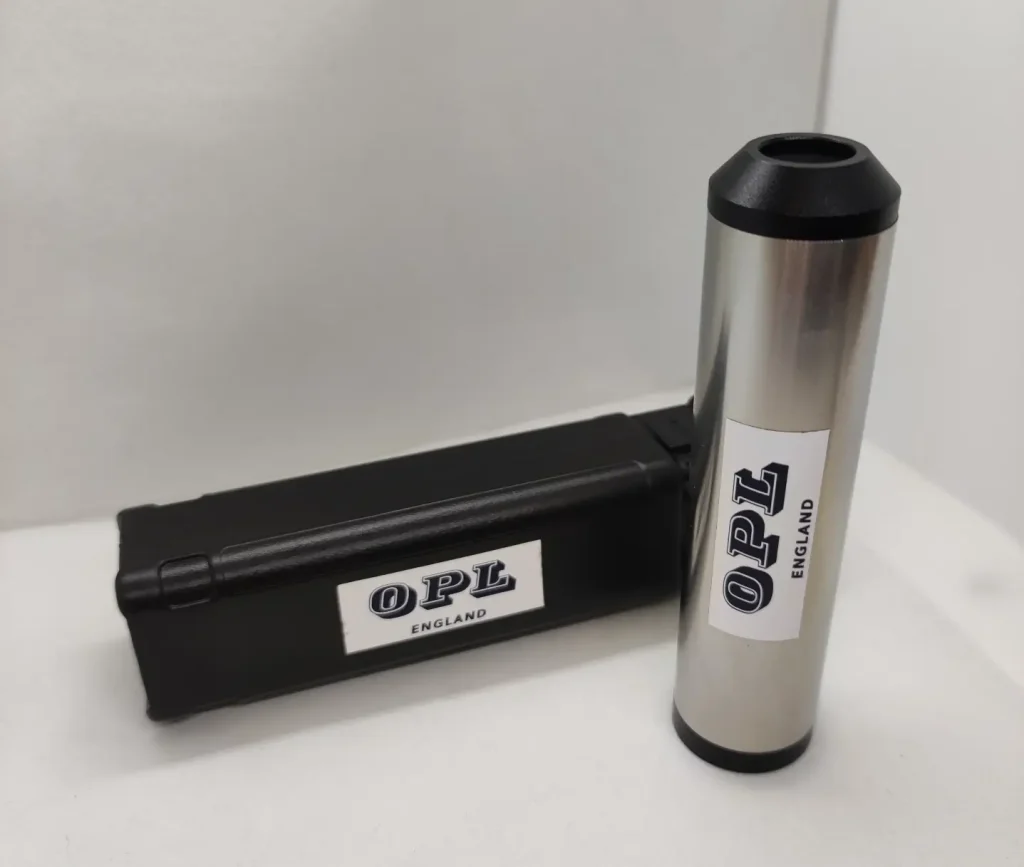
The spectroscope allows for the observation of a stone's light spectrum by revealing dark absorption lines and bright emission lines linked to the elements responsible for its colour. Used with a light source placed behind the gemstone, it provides valuable information for identifying coloured stones and analysing their chemical components.
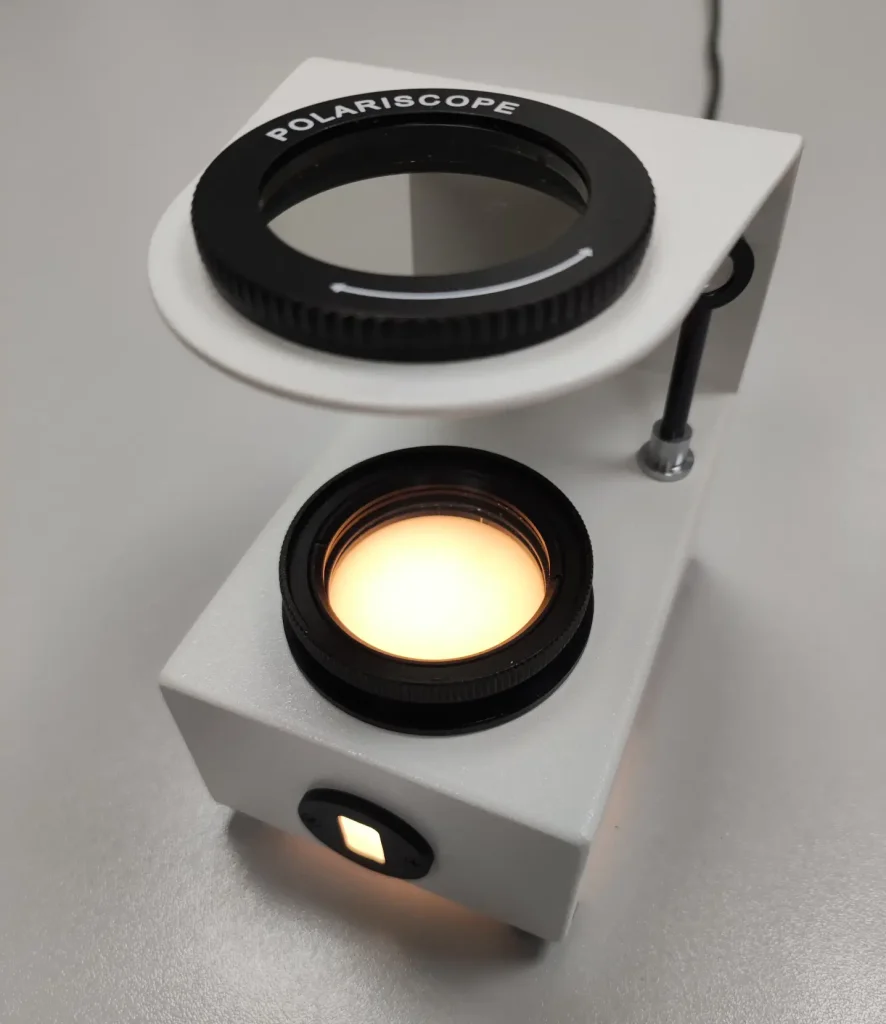
Thanks to two crossed polarising filters, the polariscope allows the study of the crystalline structure of gemstones, cut or rough. By rotating the stone 360°, it reveals optical properties essential for determining the type of crystallisation. A conoscope can be associated with it in order to analyse the optical axes of birefringent and transparent gemstones. Each student has their own polariscope to refine gemmological identification.
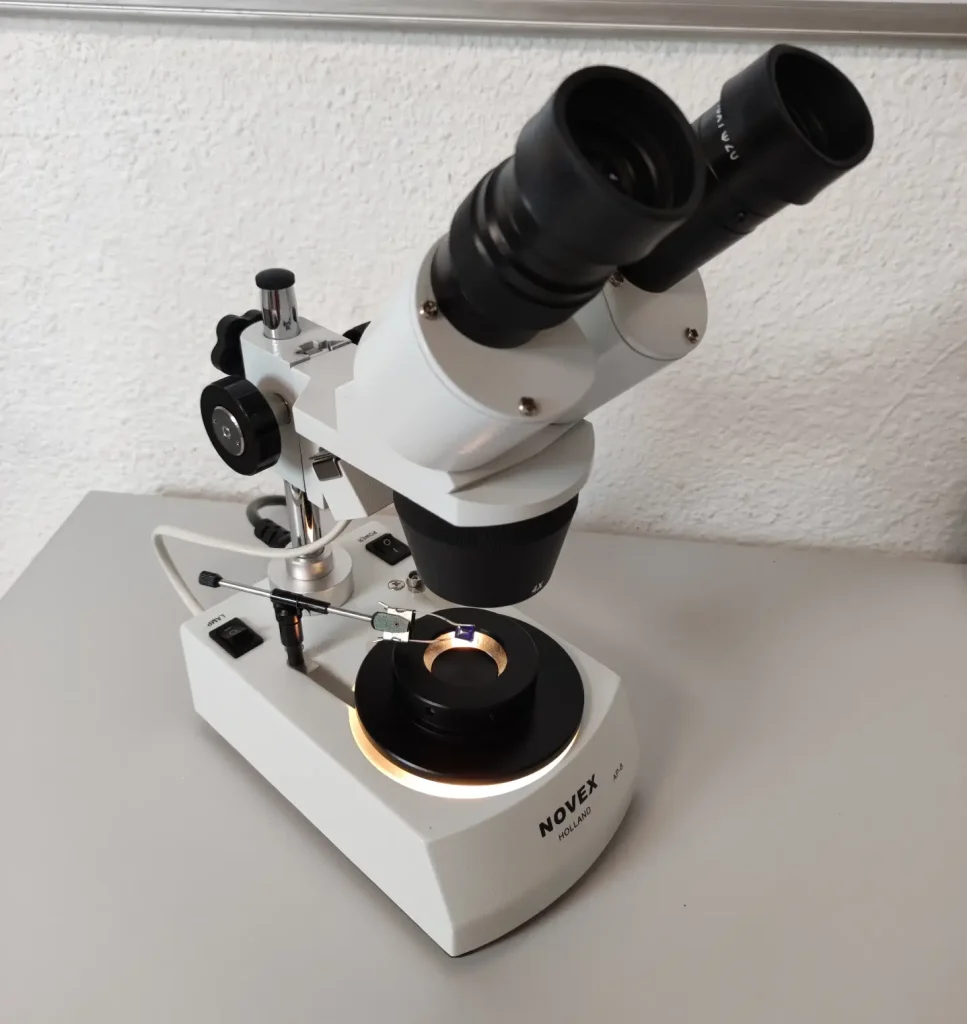
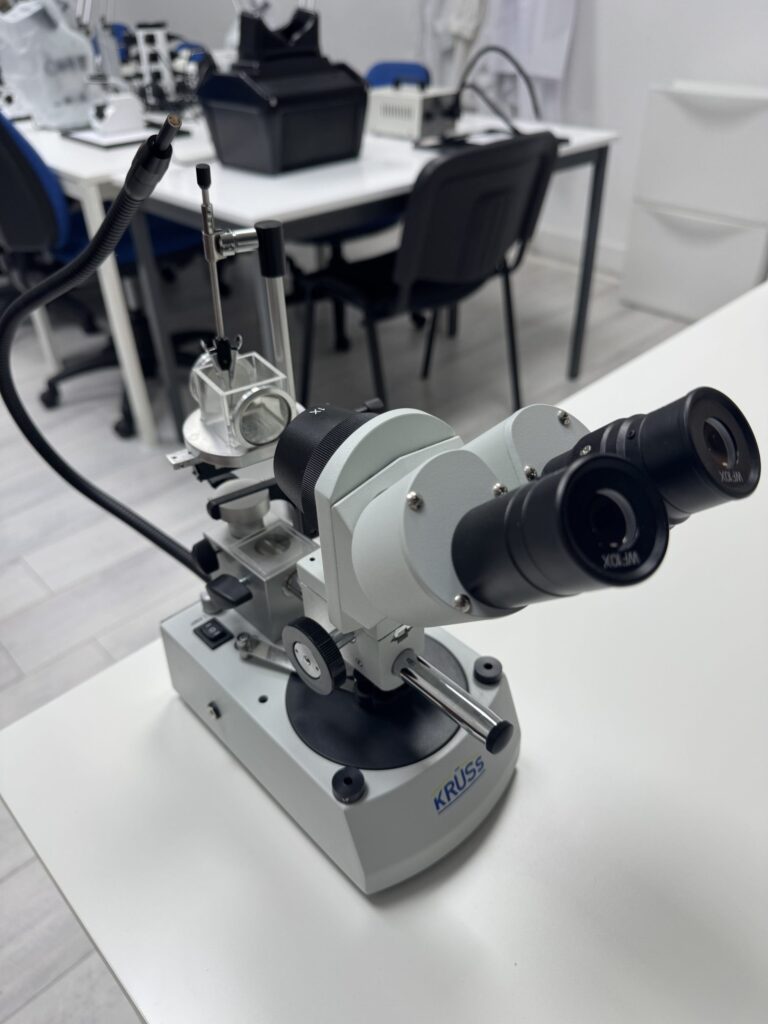
The stereomicroscope, also called a binocular microscope, allows for direct observation of rough or cut stones without prior preparation. Unlike conventional microscopes, it requires neither flat samples nor a reflective surface, providing a stereoscopic view ideal for macroscopic examination. Equipped with different illuminations – incident light, transmitted light, and darkfield – it allows for the precise distinguishing of low-contrast inclusions, such as grains, fissures, or cracks. A stereomicroscope is made available for two students.
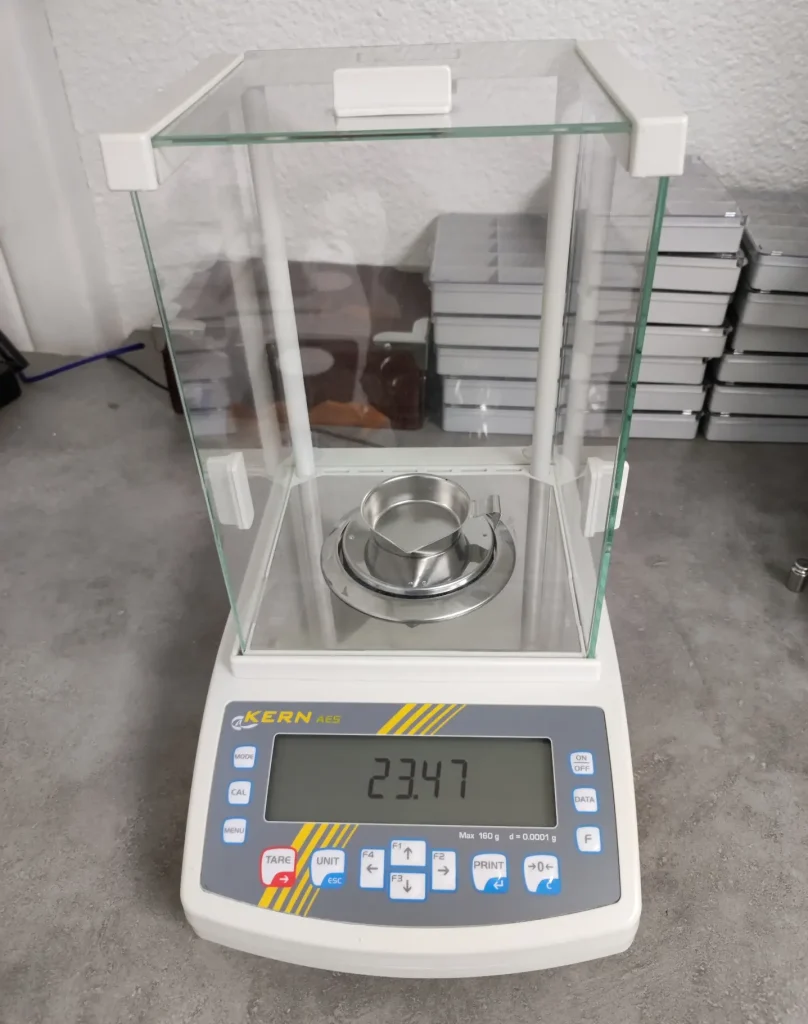
Used for weighing rough or cut gemstones, this high-precision balance offers a sensitivity of 0.001 carats (0.1 mg) and a capacity of 600 carats. It guarantees reliable measurement, in compliance with professional standards in the gemmological sector. It is present in each of our laboratories.
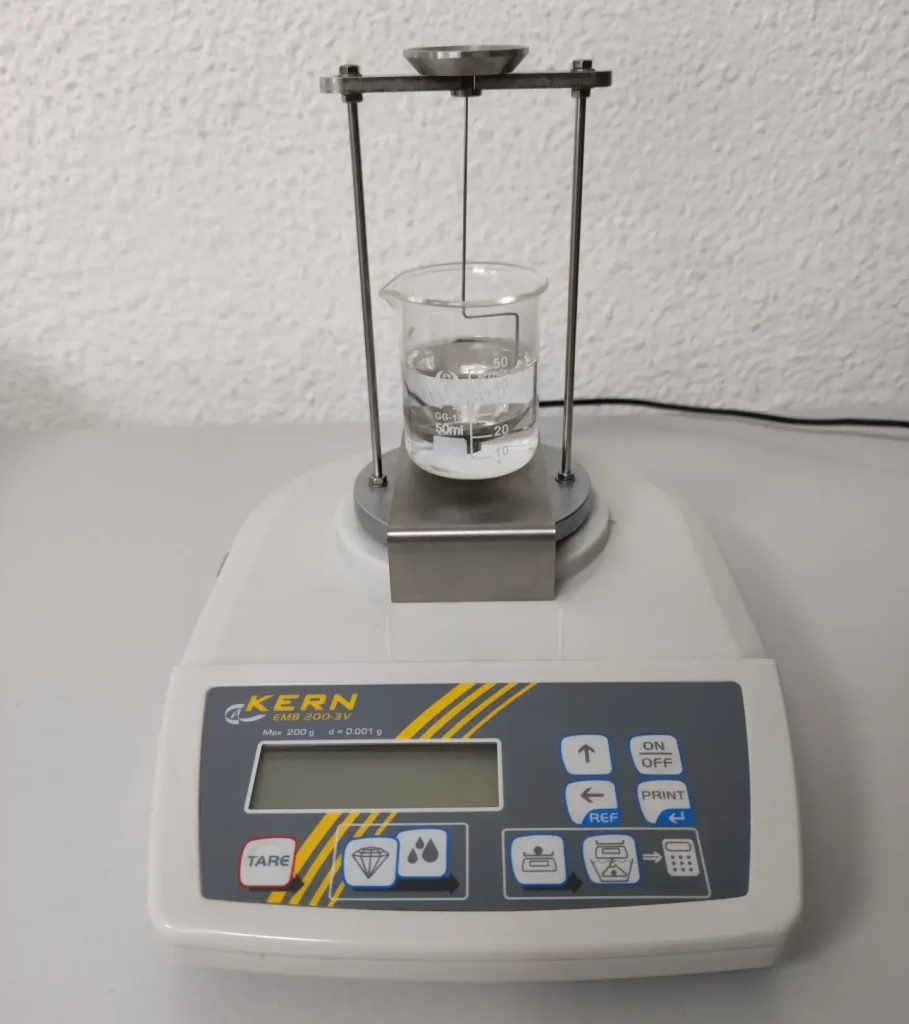
The hydrostatic balance allows for the measurement of a gemstone's density by comparing its weight in air and then in water. This simple and effective method provides an essential indicator for gemmological identification, particularly for differentiating visually similar stones. It is present in each of our laboratories.
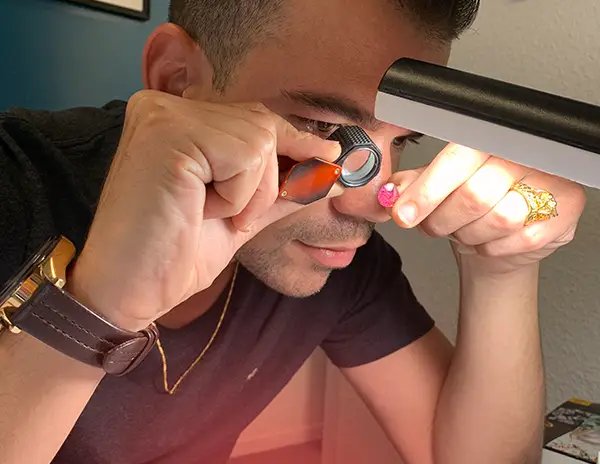
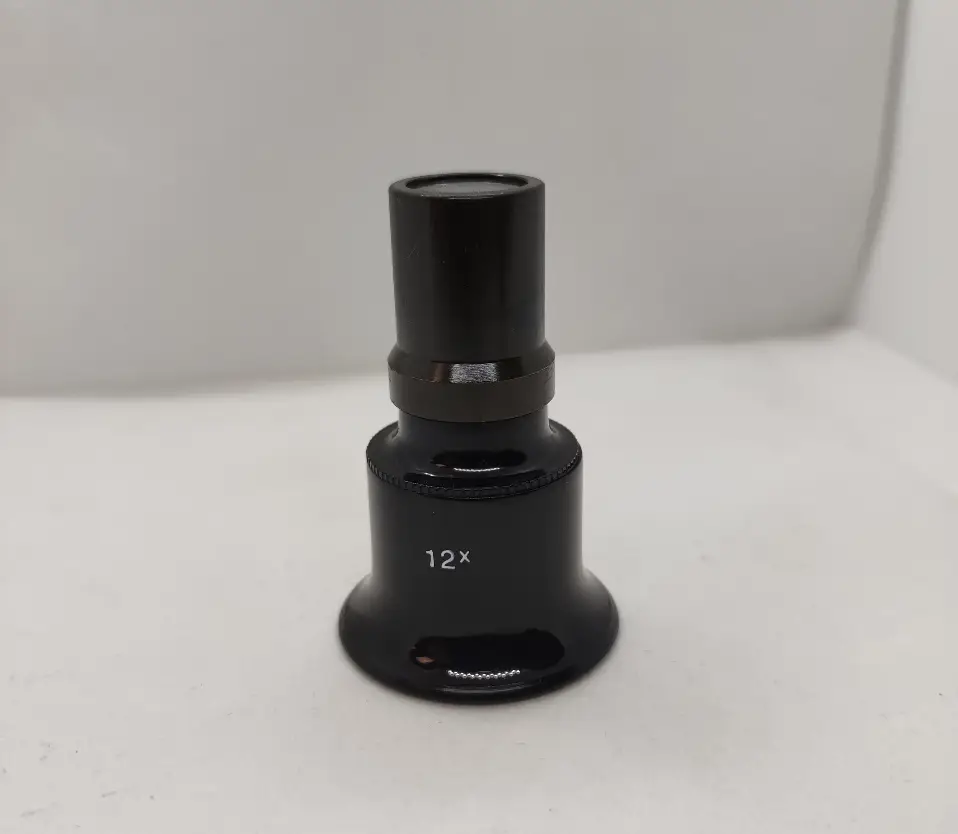
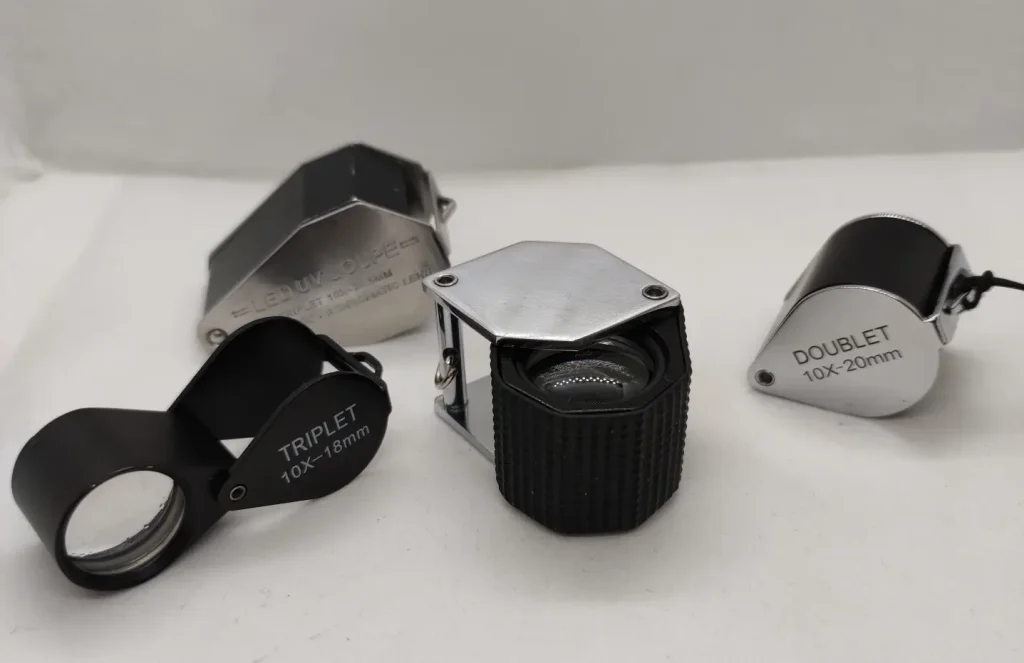
A fundamental gemmology tool, the x10 apochromatic loupe allows for clear observation without image distortion or inversion. It corrects chromatic aberrations for improved visual accuracy. Other magnifications are available (x20, x30) depending on analysis requirements. Each student has their own loupe.
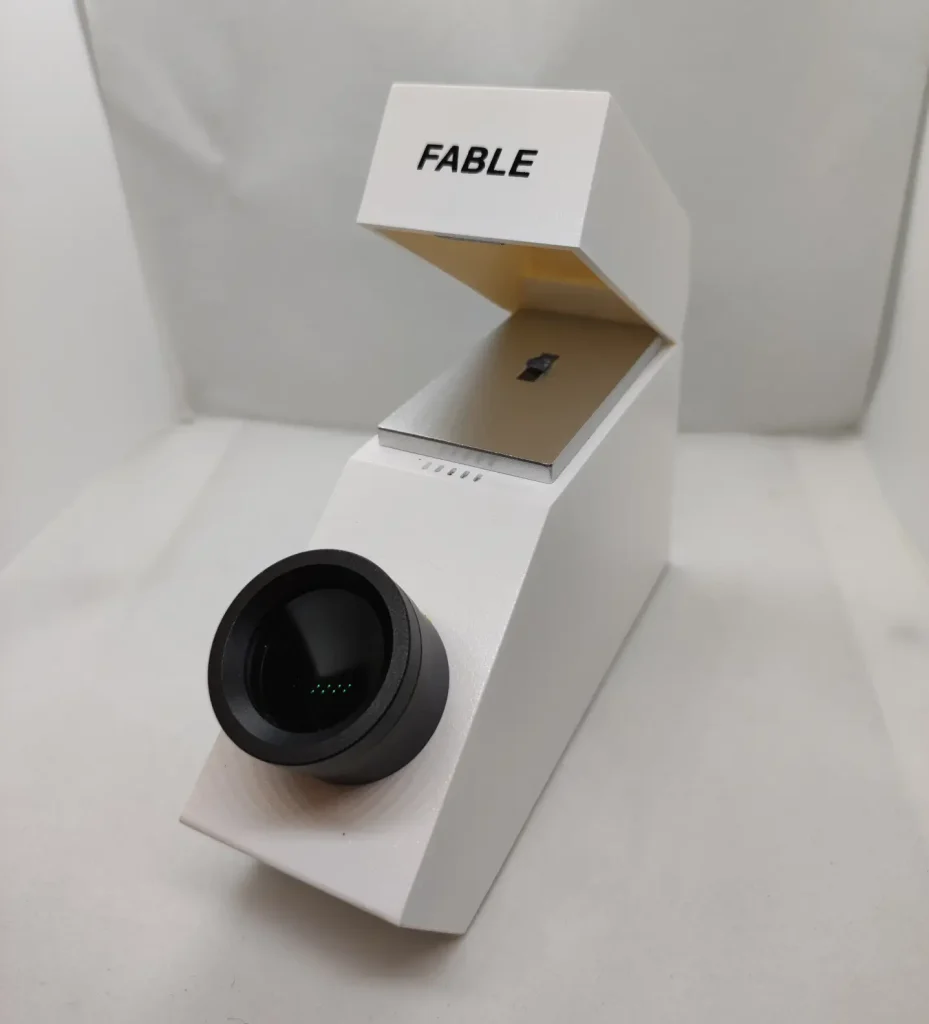
The refractometer allows for the measurement of a stone's refractive index, an essential piece of data for its identification. The gemstone must have a flat, polished facet, brought into contact with a thin layer of calibration liquid based on diiodomethane. This instrument effectively distinguishes gemstones with similar visual properties. Each student has their own refractometer during laboratory sessions.
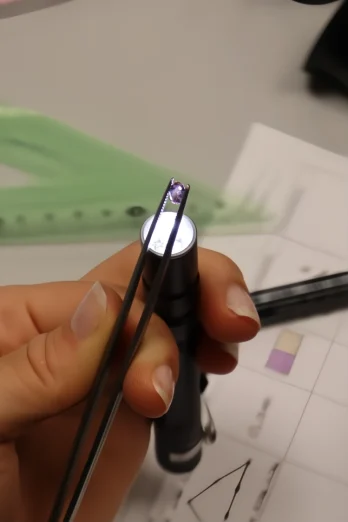
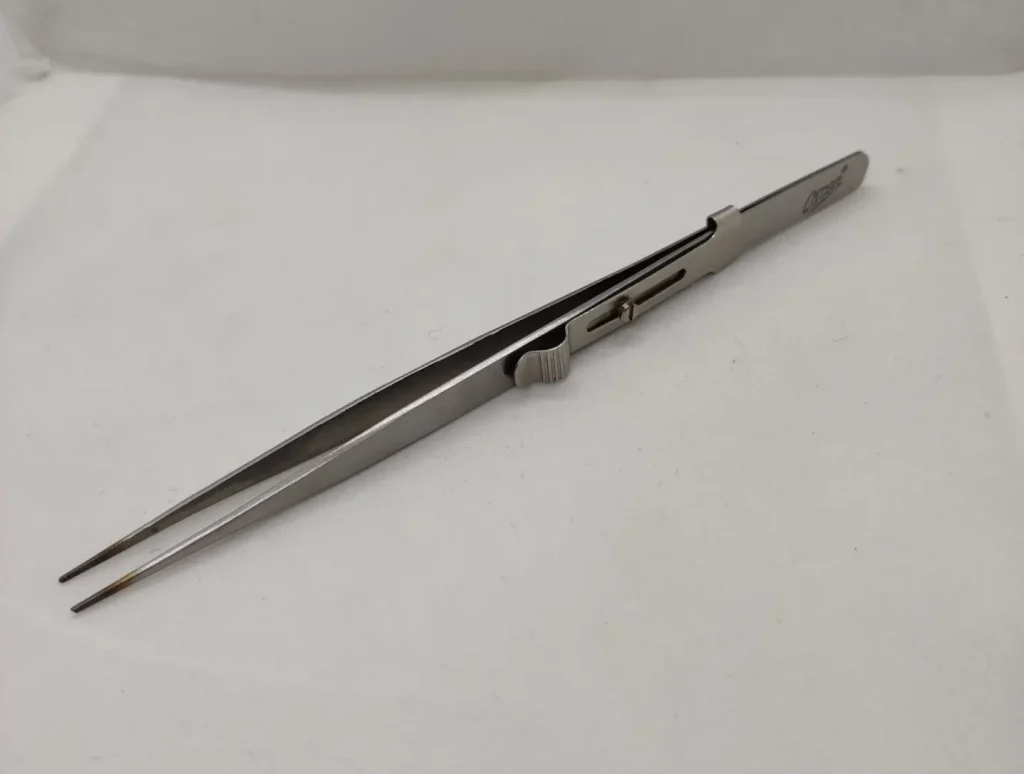
Stainless steel tweezers used for precisely handling cut stones, without risk of scratching or damage. A tool used for visual examinations, weighings, or laboratory tests. Each student has their own tweezers.
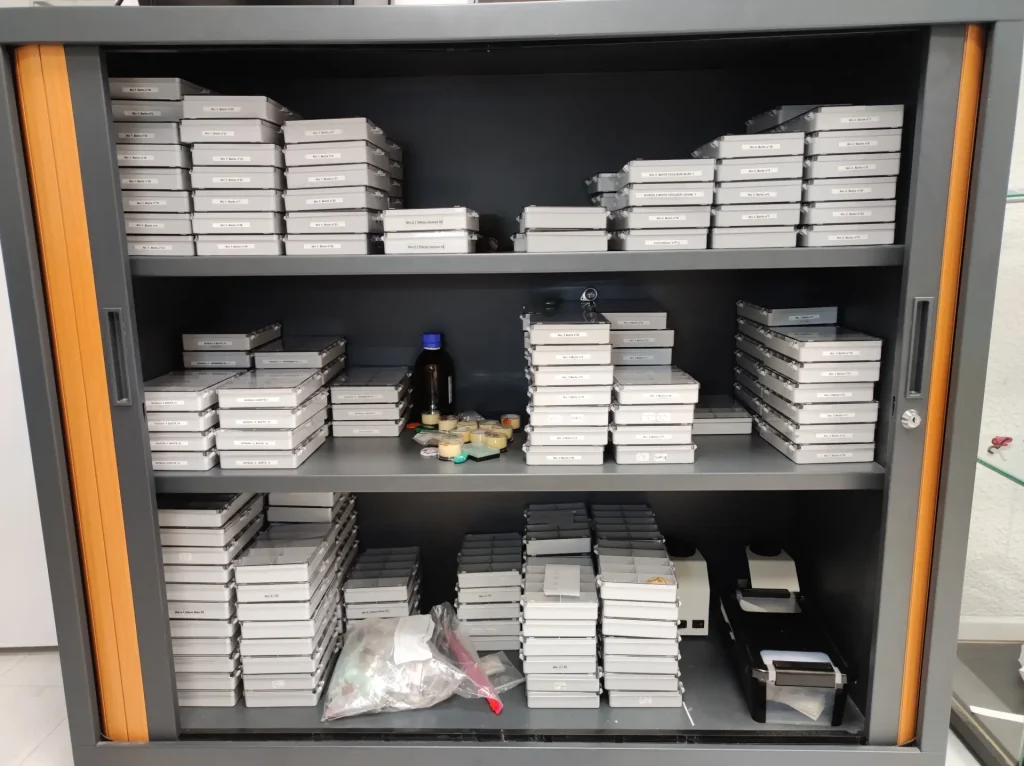
The EIG Monaco has an exceptional collection of nearly 12,000 stones. It covers all the major gemmological families (corundums, beryls, spinels, etc.), including rare specimens that require advanced technical skills for their evaluation. The collection also includes a wide variety of ornamental stones. The gemstones are classified by levels of complexity, following a pedagogical progression of 6 degrees, perfectly integrated into the learning of gemmology.
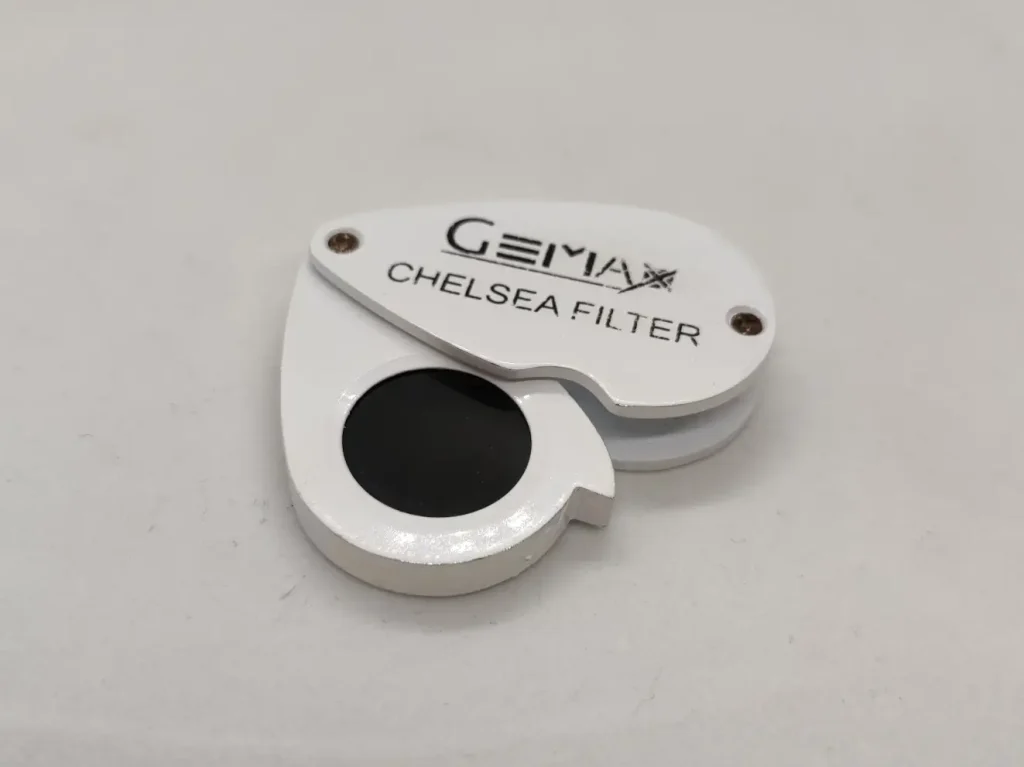
The Chelsea filter is used to detect the presence of chromium or cobalt in a stone, to aid in the identification of natural emeralds and synthetic sapphires. Simple to use, it allows for an initial visual sorting by revealing specific reactions under strong light. It is present in each of our laboratories.
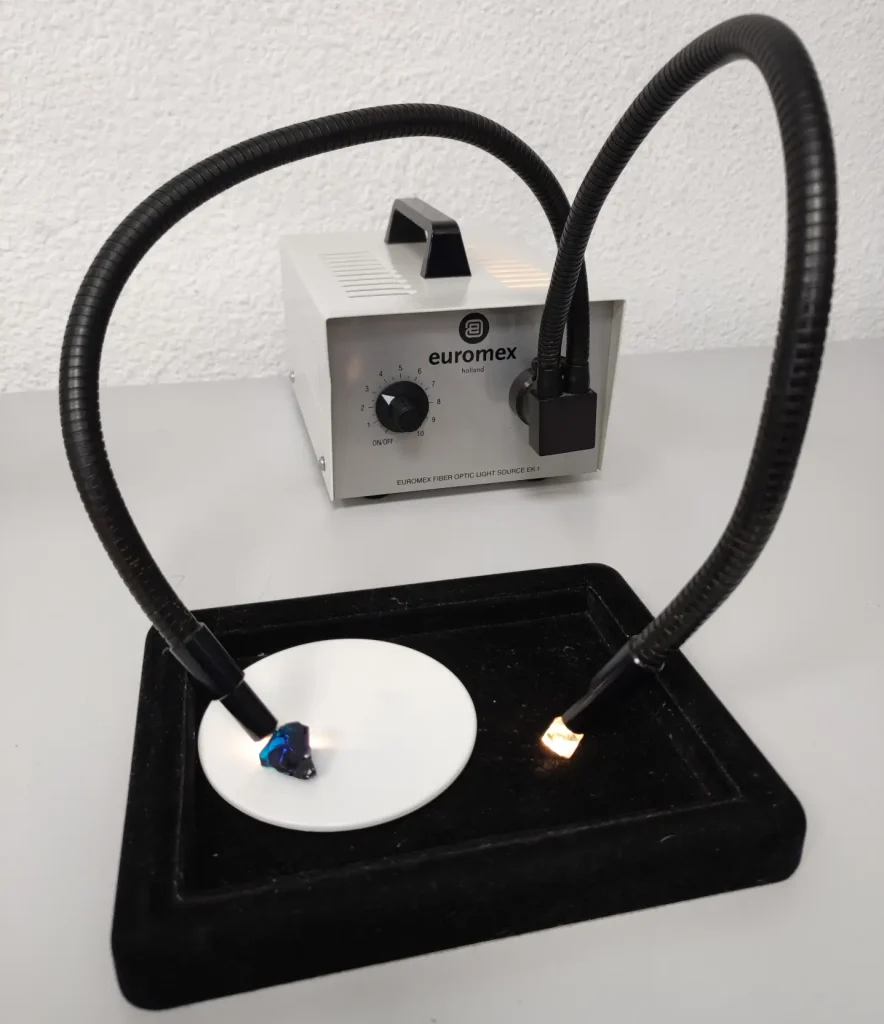
This high-end light source provides constant and powerful illumination, essential for laboratory observations. Equipped with two fibre optic guides, it allows for precise and adjustable lighting, ideal for detailed analysis of inclusions or gemstone optical effects. It is present in each of our laboratories.
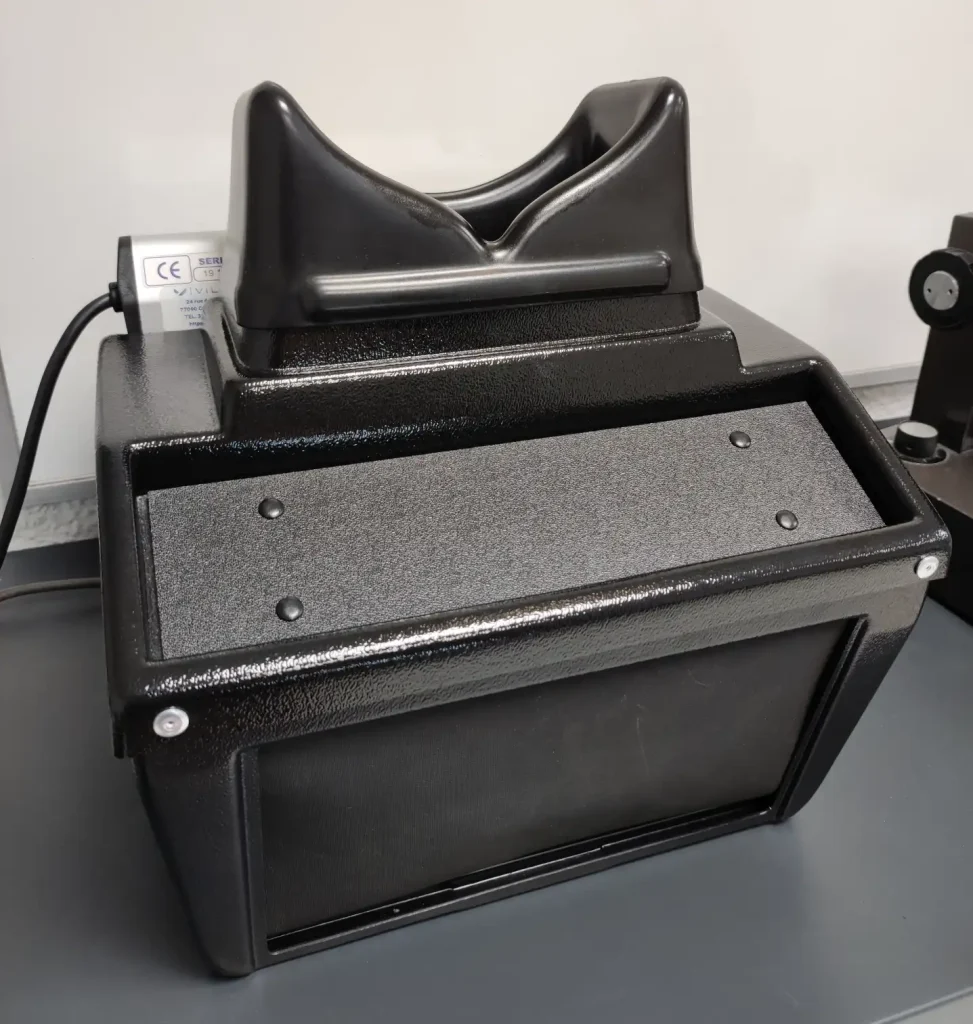
The UV cabinet allows the observation of gem luminescence under short (254 nm) and long (365 nm) ultraviolet rays. It reveals the intensity and colour of fluorescence and phosphorescence, which are useful for identifying certain stones, detecting possible heat treatments, and differentiating between natural gems and imitations or synthetics. A complementary tool for refining gemmological expertise. It is present in each of our laboratories.
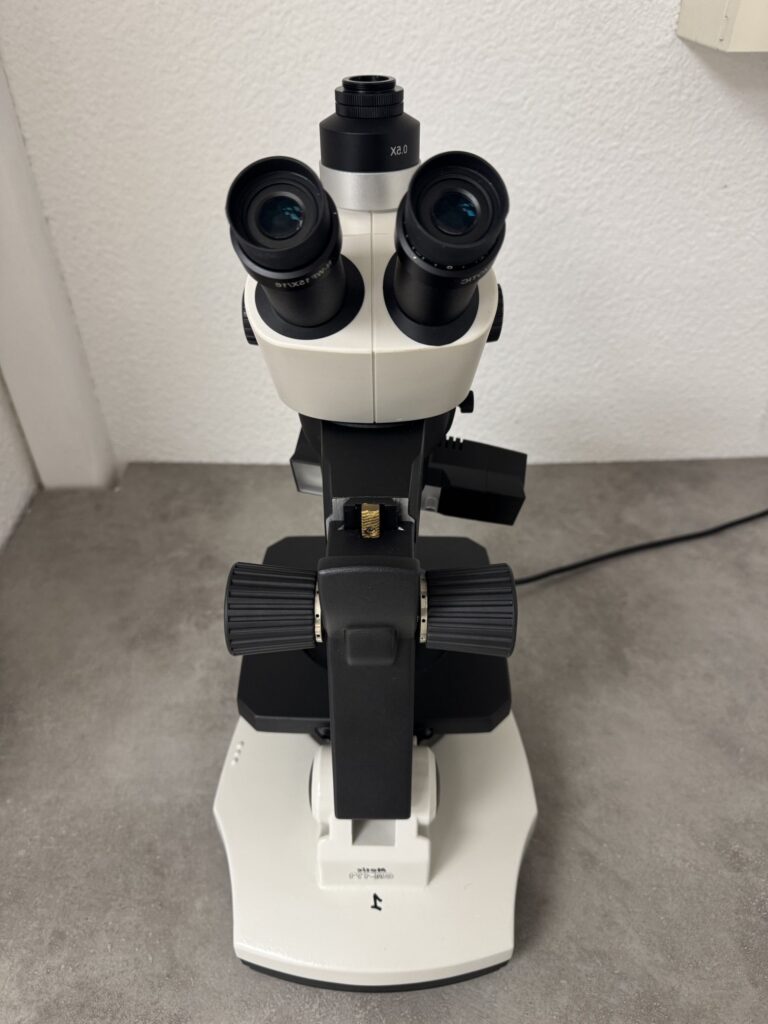
Non-existent in other gemmology schools, the EIG Monaco's trinocular microscope allows for precise gemstone observation, with the possibility of connecting to a camera for shared or photographic analysis. It plays a key role in learning visual expertise, preparing students for the demands of the professional field. This microscope is accessible to students from degrees 4, 5, and 6 of the gemmology curriculum.
Unique in the field of gemmological training, the EIG Monaco's binocular immersion microscope allows for extremely precise observation of inclusions and the internal structure of gemstones. The use of an immersion liquid reveals details that would otherwise be invisible, which are essential for determining the origin and authenticity of stones. This rare tool offers students privileged access to cutting-edge technology, in the service of excellent training. It is present in each of our laboratories.